
Categories
Selling A HomePublished September 23, 2026
The Biggest Misconceptions We Hear: "Let's Just Price It High and See What Happens."

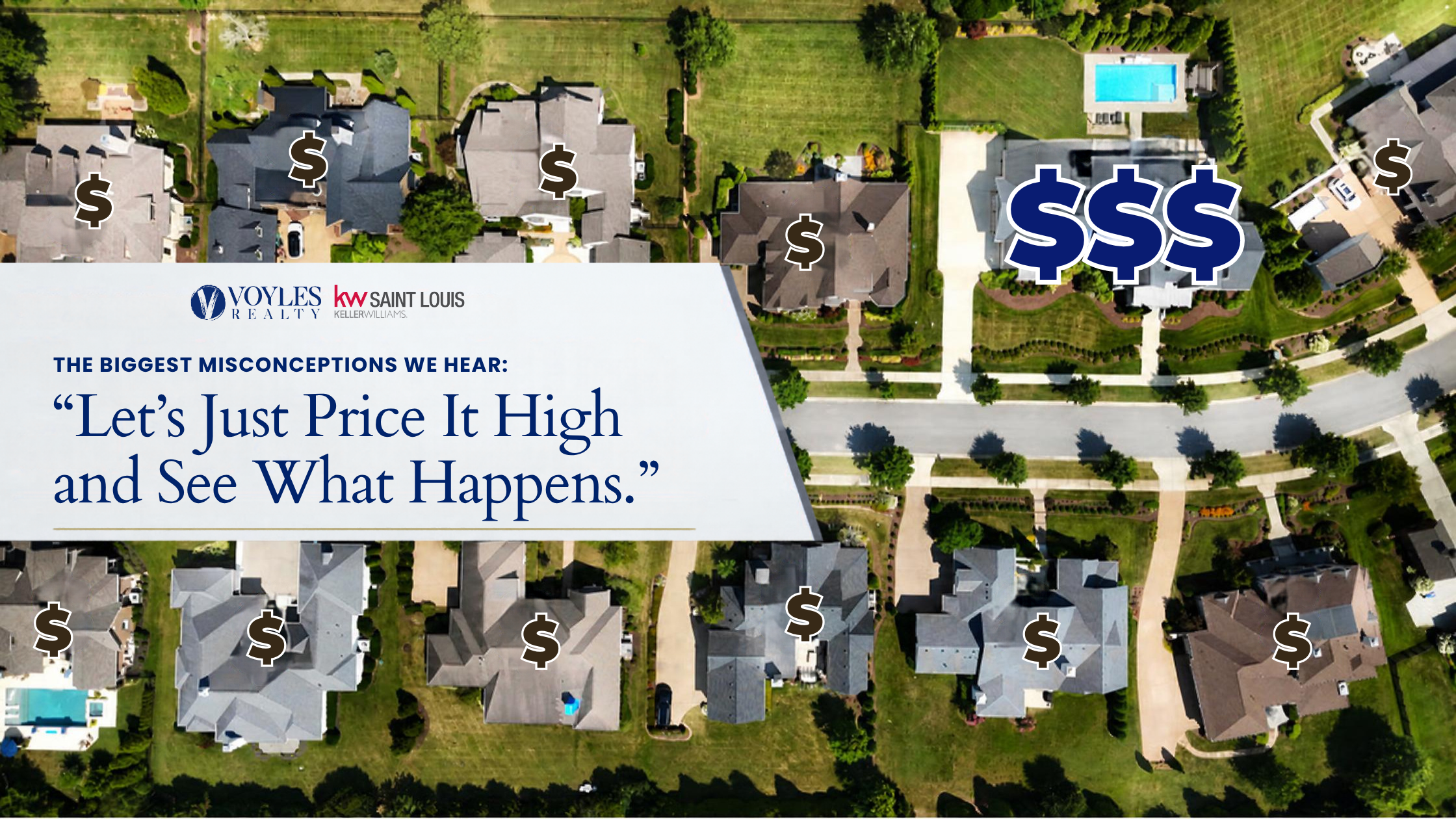
It's one of the most common conversations we have with sellers.
"Let's list it a little high. We can always come down later."
At first glance, it sounds like a smart strategy. After all, no one wants to leave money on the table.
But in today's real estate market, intentionally overpricing a home often has the opposite effect. Instead of creating room to negotiate, it can reduce showings, limit buyer interest, and ultimately lead to a lower final sales price than if the home had been priced correctly from the start.
Here's why.
Why This Feels Like the Safe Choice
We completely understand the thought process.
Most sellers are thinking:
- "Someone might be willing to pay more."
- "We don't want to undersell the house."
- "Buyers always negotiate anyway."
- "We can lower the price later if we need to."
Those are reasonable thoughts.
The problem is that today's buyers don't shop for homes the way they did twenty years ago.
Buyers Know the Market, Too
Most buyers have been watching the market for weeks—or even months—before they schedule a showing.
They've seen similar homes.
They've compared photos.
They've looked at price histories.
They've watched what sells quickly and what sits.
When a home is priced significantly above comparable properties, buyers often don't think:
"Maybe there's room to negotiate."
Instead, many think:
"That's overpriced."
And they move on to the next listing.
You Only Get One "First Week"
One of the most valuable things a listing receives is attention when it first hits the market.
That's when:
- Buyers with saved searches receive notifications.
- Real estate agents are watching for new inventory.
- Online platforms often highlight newly listed homes.
- Curious buyers schedule showings.
This initial excitement is difficult to recreate.
If a home enters the market overpriced, many buyers who might have been interested simply skip it.
Even if the price is reduced later, you've already missed the opportunity to capture that first wave of attention.
Pricing Too High Can Actually Reduce Competition
Many sellers hope that pricing higher will create room for negotiation.
Ironically, the opposite often happens.
A well-priced home may attract:
- More online views
- More showings
- More offers
- Greater competition among buyers
Competition is often what drives stronger offers.
An overpriced home may receive fewer showings, fewer offers, and less negotiating leverage.
Price Reductions Can Raise Questions
There's nothing wrong with adjusting a price when market feedback suggests it's appropriate.
However, multiple price reductions sometimes cause buyers to wonder:
- "Why hasn't this sold?"
- "Is there something wrong with it?"
- "Should we wait for another price drop?"
Even when nothing is wrong with the home, perception can influence buyer behavior.
But What About Negotiating?
Negotiation is still part of real estate.
Pricing appropriately doesn't mean pricing so low that you leave money on the table.
Instead, it means entering the market at a price that's supported by comparable sales, current conditions, and buyer demand.
From there, buyers can still make offers, and sellers can still negotiate.
The goal isn't to eliminate negotiation.
The goal is to encourage it.
Are There Times When Pricing Higher Makes Sense?
Sometimes.
Every property is unique.
For example, pricing strategy may differ when:
- Comparable sales are limited.
- The property is truly one of a kind.
- It's a luxury home with a smaller buyer pool.
- It's a large acreage tract or specialized commercial property.
- Market conditions are changing rapidly.
These situations require careful analysis—not simply adding extra dollars "just in case."
The Real Goal Isn't Getting the Highest List Price
The goal is achieving the strongest overall result.
That includes:
- Attracting qualified buyers.
- Generating strong interest early.
- Creating healthy competition.
- Negotiating from a position of strength.
- Reaching the closing table successfully.
The list price is only the beginning of the conversation.
The final outcome is what matters most.
From Josh's Desk
One of the hardest conversations I have with sellers isn't about the condition of their home—it's about pricing.
Everyone wants to know they're getting every dollar their home is worth, and I completely understand that.
But I've also seen what happens when a home is priced too aggressively. Showings slow down. Buyers stop asking questions. Eventually, we're talking about price reductions instead of multiple offers.
On the other hand, I've watched well-priced homes create excitement from day one. More buyers walk through the door. More conversations happen. And sometimes those competing buyers accomplish exactly what the seller was hoping for in the first place.
Pricing isn't about aiming high.
It's about aiming accurately.
That's what gives sellers the best chance of reaching their goals.
Frequently Asked Questions
Does pricing lower mean I'll get less money?
Not necessarily. A competitive asking price can attract more buyers, increase showing activity, and sometimes lead to stronger offers than an overpriced listing receives.
Can we lower the price later?
Yes. Price adjustments are always possible.
The question is whether waiting will help or hurt your momentum in the marketplace.
How do you determine the right price?
We evaluate recent comparable sales, current competition, market trends, property condition, location, buyer demand, and features that make your home unique.
Pricing isn't based on one number—it's based on market evidence.
What if my neighbor's house sold for more?
Every property is different.
Even homes in the same subdivision can vary in condition, updates, lot characteristics, layout, and timing. A comparative market analysis looks beyond the address to understand how those differences affect value.
Should I price higher to leave room for negotiation?
Sometimes a small amount of negotiating room is appropriate, but intentionally pricing well above market value often reduces buyer interest before negotiations ever begin.
The Reality
Pricing your home isn't about testing the market—it's about understanding it.
A thoughtful pricing strategy gives your home the best opportunity to attract qualified buyers, generate interest, and negotiate from a position of strength. While every home is unique, the goal is always the same: position the property where the market is most likely to respond.
That's how successful sales begin.

Josh Voyles
Realtor® Broker Associate | Voyles Realty Group | Keller Williams Saint Louis
or another way