
Categories
InvestmentPublished September 4, 2026
Why Are So Many Investors Buying in South St. Louis?

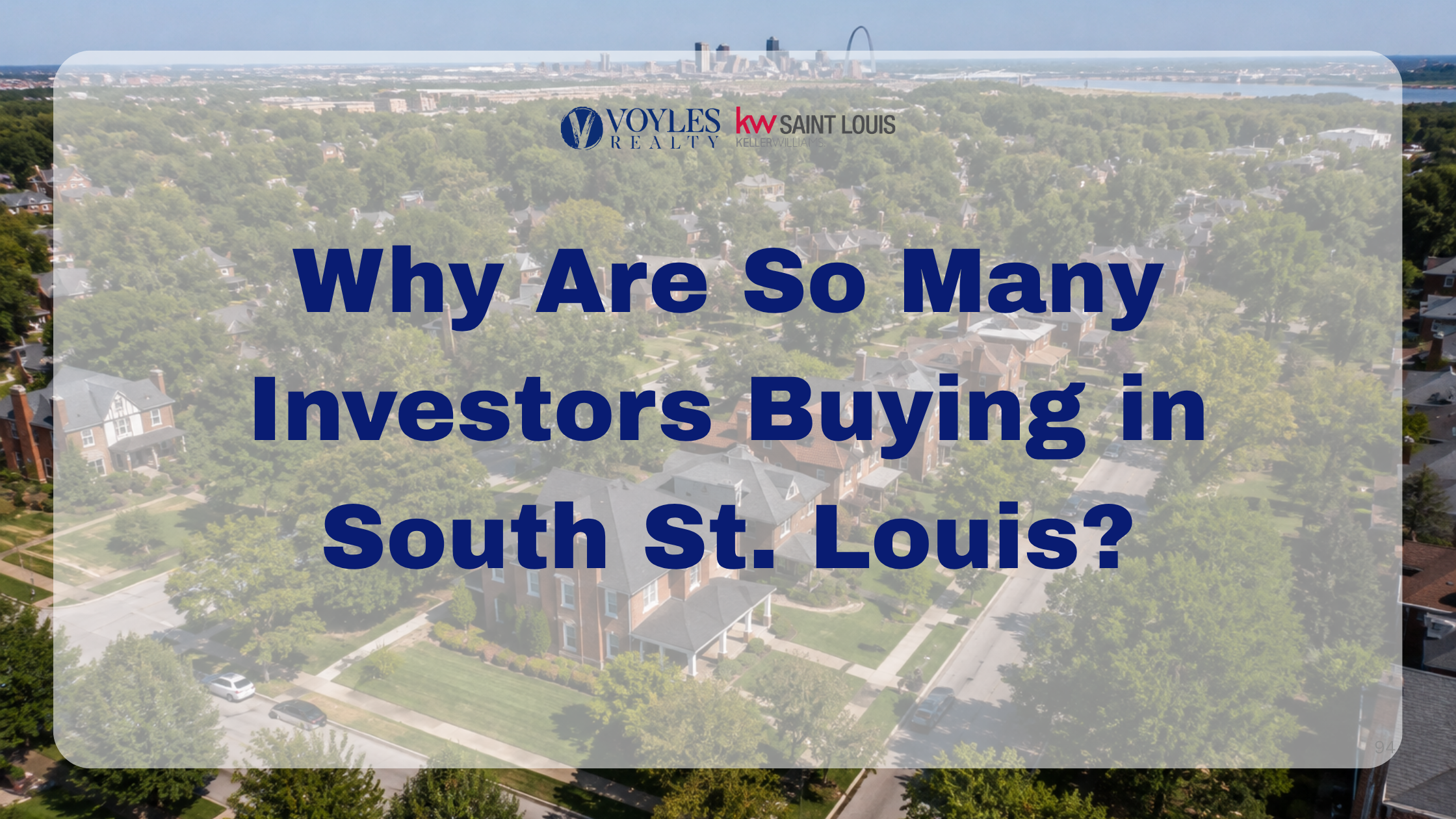
Drive through South St. Louis today, and you'll notice something interesting.
A house that needed work six months ago now has fresh siding and new windows. A long-vacant storefront is under renovation. A duplex that sat empty is suddenly occupied again.
That's not a coincidence.
Over the past several years, South St. Louis has attracted growing attention from investors looking for opportunities that balance affordability, rental demand, and long-term upside. While every neighborhood is different, many investors see this part of the city as a place where thoughtful improvements can create lasting value. The city has also invested heavily in neighborhood transformation initiatives and infrastructure, helping encourage additional private investment in many areas.
But what exactly are they looking for?
It Starts With Affordability
Compared to many major metropolitan areas, St. Louis remains one of the most affordable housing markets in the country, giving investors a lower barrier to entry than they might find elsewhere.
For investors, that can mean:
- Lower acquisition costs
- More opportunities to diversify
- Greater flexibility when renovating properties
- The ability to purchase multiple properties rather than a single high-priced asset
Affordability alone doesn't make a great investment—but it gives investors more options.
Strong Demand for Rental Housing
Many South St. Louis neighborhoods continue to attract renters looking for convenient access to employment centers, restaurants, parks, hospitals, universities, and major highways.
Investors often evaluate areas where:
- Rental demand remains steady
- Homes appeal to a wide range of tenants
- Commute times are reasonable
- Everyday amenities are nearby
A property doesn't have to be luxury housing to be a successful investment.
Sometimes consistency is more valuable than chasing the highest possible rent.
Character You Can't Build Today
One thing many investors appreciate about South St. Louis is its housing stock.
Instead of rows of identical homes, you'll find:
- Brick architecture
- Historic details
- Duplexes and four-family buildings
- Walkable neighborhoods
- Established tree-lined streets
These features often appeal to tenants looking for something with personality and charm that newer developments may not offer.
Neighborhood Momentum Matters
Experienced investors rarely evaluate one property in isolation.
They're asking bigger questions.
- Are homes being renovated?
- Are businesses opening nearby?
- Are vacant buildings being redeveloped?
- Is public investment occurring?
- Are private developers investing in the area?
The City of St. Louis has directed significant funding toward neighborhood revitalization projects, transportation improvements, and redevelopment efforts designed to encourage additional private investment. While every neighborhood is unique, these initiatives are contributing to renewed interest in many parts of the city.
Momentum doesn't guarantee future appreciation—but it often becomes part of an investor's evaluation.
Investors Look Beyond Today's Numbers
A common misconception is that investors only care about today's rental income.
In reality, they're often asking:
- Could this property support higher rents after improvements?
- Is there unused space that could add value?
- Would renovations increase tenant demand?
- Is there redevelopment potential?
- Could changing neighborhood conditions improve long-term value?
Some of the best investment opportunities aren't the properties that already look perfect.
They're the ones with room to grow.
Every South City Neighborhood Is Different
One mistake we see is treating "South St. Louis" as a single market.
It isn't.
Every neighborhood has its own personality, price points, tenant demographics, and investment opportunities.
A duplex in Tower Grove South may appeal to a different investor than a mixed-use building in Benton Park or a single-family rental in Bevo.
Understanding those differences is often more important than choosing "the hottest neighborhood."
It's About the Numbers—Not the Hype
Good investors don't buy because someone says an area is "up and coming."
They evaluate:
- Purchase price
- Renovation costs
- Expected rents
- Vacancy risk
- Operating expenses
- Neighborhood trends
- Long-term exit strategy
If the numbers work, the property deserves a closer look.
If they don't, even a popular neighborhood may not be the right investment.
From Josh's Desk
People sometimes ask me, "What's the next hot neighborhood?"
The truth is, I don't chase hype.
I'd rather help a client understand why a property makes sense.
Sometimes that's a beautifully renovated duplex in a well-established neighborhood. Sometimes it's a building that needs work but sits in an area where investment is steadily increasing. Other times, it's a property we decide not to pursue because the numbers simply don't support the purchase.
The best investors I work with aren't looking for shortcuts. They're looking for opportunities backed by solid research, realistic expectations, and a long-term plan.
That's the approach I encourage every client to take.
Frequently Asked Questions:
Is South St. Louis a good place to buy rental property?
It depends on the neighborhood, the property's condition, your investment goals, and your financial analysis. South St. Louis includes many distinct neighborhoods, each with different opportunities and risks.
Are investors only buying fixer-uppers?
No. While value-add properties remain popular, many investors also purchase move-in-ready rentals or mixed-use buildings that already generate income.
Is appreciation guaranteed in these neighborhoods?
No. Real estate values can rise or fall based on market conditions, economic factors, and local development. Investors should evaluate each opportunity on its own merits rather than assuming future appreciation.
What types of properties are most common?
South St. Louis offers a diverse mix of single-family homes, duplexes, four-family buildings, mixed-use properties, and commercial buildings, giving investors a variety of options depending on their strategy.
Should I focus on one neighborhood?
Many experienced investors start by learning one area exceptionally well. Understanding neighborhood trends, rents, renovation costs, and tenant demand can be more valuable than trying to invest everywhere at once.
Bottom Line
South St. Louis continues to attract investors because it offers a combination of affordability, diverse housing stock, strong rental demand, and neighborhoods where thoughtful investment can create long-term opportunities. While no investment is without risk, taking the time to understand the numbers—and the neighborhood—can help investors make more informed decisions.
Whether you're purchasing your first rental property or expanding an existing portfolio, success comes from evaluating each opportunity on its own merits rather than following the latest real estate trend.

Josh Voyles
Realtor® Broker Associate | Voyles Realty Group | Keller Williams Saint Louis
or another way